

JSPS Topics
Special Content
Dr. KITAGAWA Susumu|Voices of Researchers
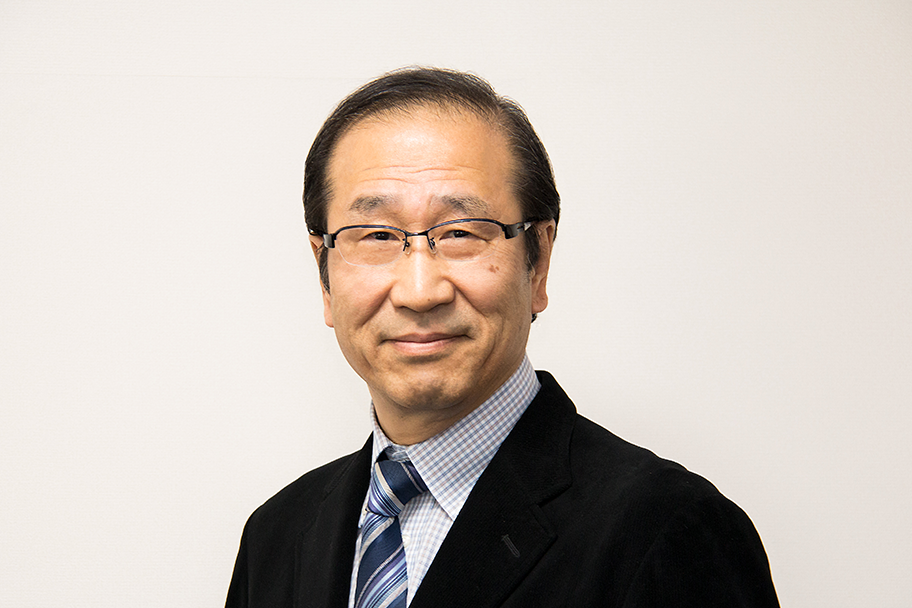
KITAGAWA Susumu
Executive Vice-President Executive Director / Executive Vice-President / Distinguished Professor, Kyoto University Institute for Advanced Study
Biography
Research Theme
Coordination chemistry, coordination space chemistry, and porous materials chemistry
- Born in 1951. PhD of Engineering. Graduate School of Engineering, Kyoto University.
- Associate Professor, Kindai University (1988)
- Professor, Tokyo Metropolitan University (1992)
- Professor, Kyoto University (1998)
- Director, Institute for Integrated Cell-Material Sciences (WPI-iCeMS), Kyoto University (2013)
- Distinguished Professor, Kyoto University Institute for Advanced Study (2017)
- Assumed current position in 2024
- Nobel Prize in Chemistry (2025)
Research Theme
Coordination chemistry, coordination space chemistry, and porous materials chemistry
Grants-in-Aid for Scientific Research (KAKENHI) Seed Innovation
I began my career as a researcher at Kindai University. At that time, the basic operational funding for universities was more generous than it is today. Even with a relatively small Grant-in-Aid for Scientific Research (KAKENHI), I was able to immerse myself in research with complete freedom to pursue my own ideas. My research began with monovalent copper which, at the time, was dismissed by researchers as “the most boring ion.”—It was, however, precisely because the KAKENHI supported those early efforts that I was able to trust my intuition and deepen my exploration. I call this “underground research,” which takes 20 to 30 years of basic research to bear fruit. I am deeply grateful for the long-term support provided to me by the KAKENHI program. I sincerely hope that, in addition to the substantial funding for priority research, that the program will provide consistent support for the younger generation of researchers as well.
Sustained Support Enables Exploration of Uncharted Frontiers
I’ve received continuous support through the KAKENHI program beginning in the 1980s. Among the many grants I’ve received, the one that stands out most for enabling me to make a major leap in pursuing ambitious research was the Grant-in-Aid for Specially Promoted Research, awarded to me in 2013. By precisely designing porous materials, I and my colleagues were able to successfully develop a new class of materials capable of separating mixed gases—such as carbon monoxide and nitrogen—a task that had been considered extremely difficult using conventional technologies.
At the Institute for Integrated Cell-Material Sciences (WPI-iCeMS), which receives support via the WPI program, numerous research achievements have emerged from collaborations between researchers in fields of materials science and cell biology. For example, nitric oxide (NO), a key signaling molecule involved in regulating vascular function and neurotransmission, has been difficult to control in vivo because it is a gaseous molecule. We developed a novel porous material that releases NO only upon light irradiation, pioneering new frontiers in gas biology within cell biology.
At the Institute for Integrated Cell-Material Sciences (WPI-iCeMS), which receives support via the WPI program, numerous research achievements have emerged from collaborations between researchers in fields of materials science and cell biology. For example, nitric oxide (NO), a key signaling molecule involved in regulating vascular function and neurotransmission, has been difficult to control in vivo because it is a gaseous molecule. We developed a novel porous material that releases NO only upon light irradiation, pioneering new frontiers in gas biology within cell biology.
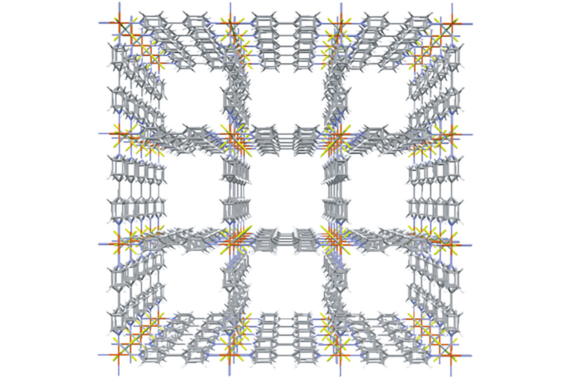
Porous Coordination Polymer ©iCeMS, Kyoto University
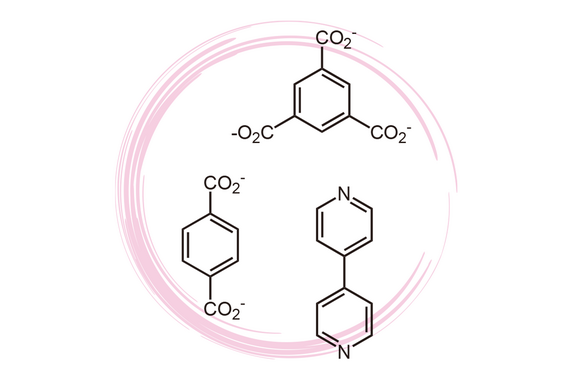
Organic ligand ©iCeMS, Kyoto University
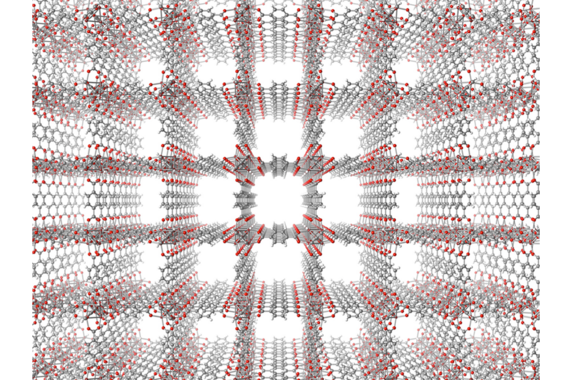
Porous Coordination Polymer ©iCeMS, Kyoto University
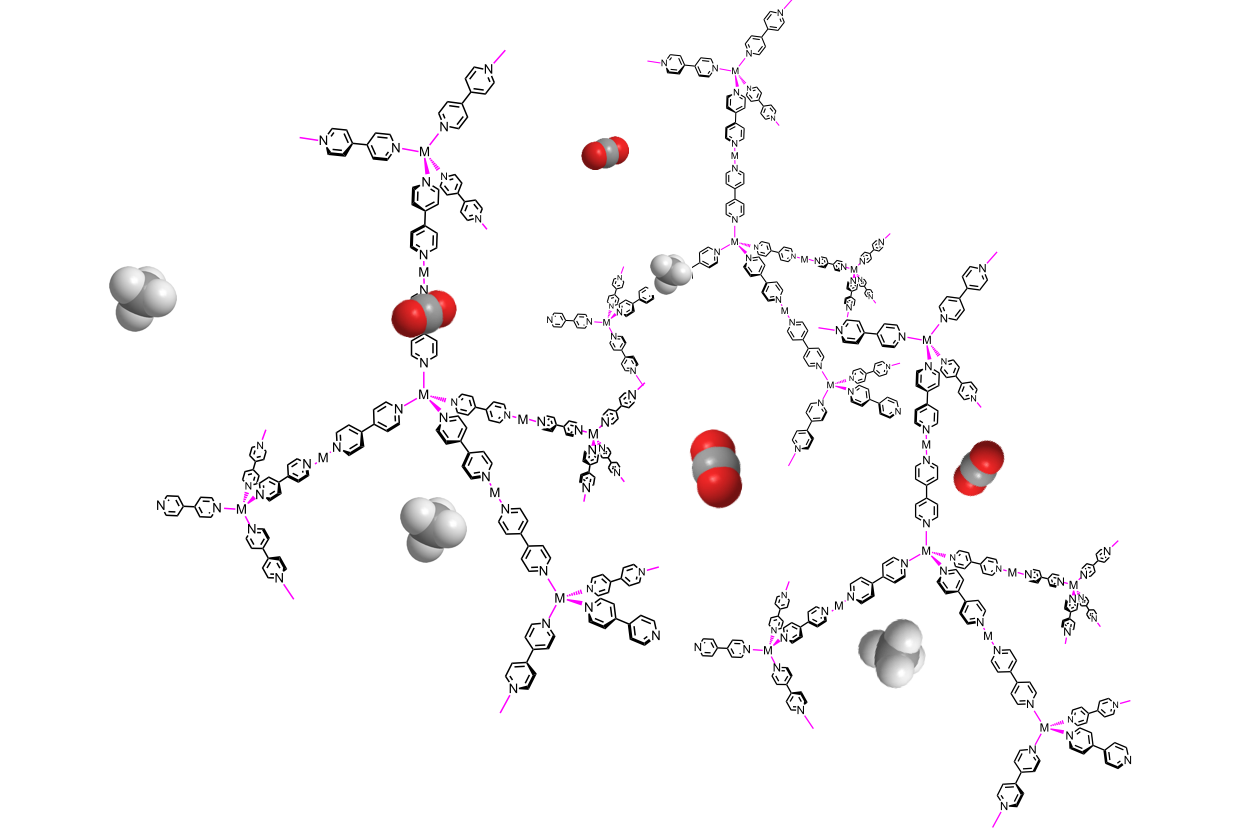
Porous Coordination Polymer ©iCeMS, Kyoto University
In addition to my KAKENHI grants, I was fortunate to receive a full decade of support through the WPI program, which enabled me to devote myself to exploring uncharted scientific territory. In science, where meaningful results often take many years to emerge, uninterrupted, long-term support will remain indispensable.
The Hidden Value of "The Usefulness of the Useless"
Science is the endeavor to shed light on the profound mysteries of nature that no one has yet recognized, and to deepen and broaden our understanding of them. Rather than following the paths others have taken, strive to become a pioneer who creates a new field in places that no one else considers worth exploring. In doing so, it is important to take an interest not only in things that seem likely to be useful in the near term, but also in things whose significance has yet to be understood. It is in the seemingly useless—what is often called "the usefulness of the useless"—that true value resides. I also encourage you not to confine yourself to your own discipline, but to broaden your horizons by engaging with researchers from other fields. As the saying goes, "Chance favors the prepared mind." Cherish the experiences and encounters that come your way each day, and continue your pursuit of discovery and innovation with patience and perseverance.
[ Voices of Researchers: Special Content Accompanying the JSPS Brochure ]
Explore more interviews in "Voices of Researchers"!
Dr.SAKAGUCHI Shimon | Dr. KITAGAWA Susumu | Dr. MINAMIDA Akemi | Dr. MAENO Ould Koutaro | Dr. SATAKE Akiko
Explore more interviews in "Voices of Researchers"!
Dr.SAKAGUCHI Shimon | Dr. KITAGAWA Susumu | Dr. MINAMIDA Akemi | Dr. MAENO Ould Koutaro | Dr. SATAKE Akiko
JSPS Brochure
The brochure containing the Researcher Interviews is available at the following link.
・JSPS Brochure 2026-2027 (PDF/2.2MB)
The brochure containing the Researcher Interviews is available at the following link.
・JSPS Brochure 2026-2027 (PDF/2.2MB)
Please follow us for the latest news!