

JSPS Topics
Special Content
Dr. SATAKE Akiko|Voices of Researchers
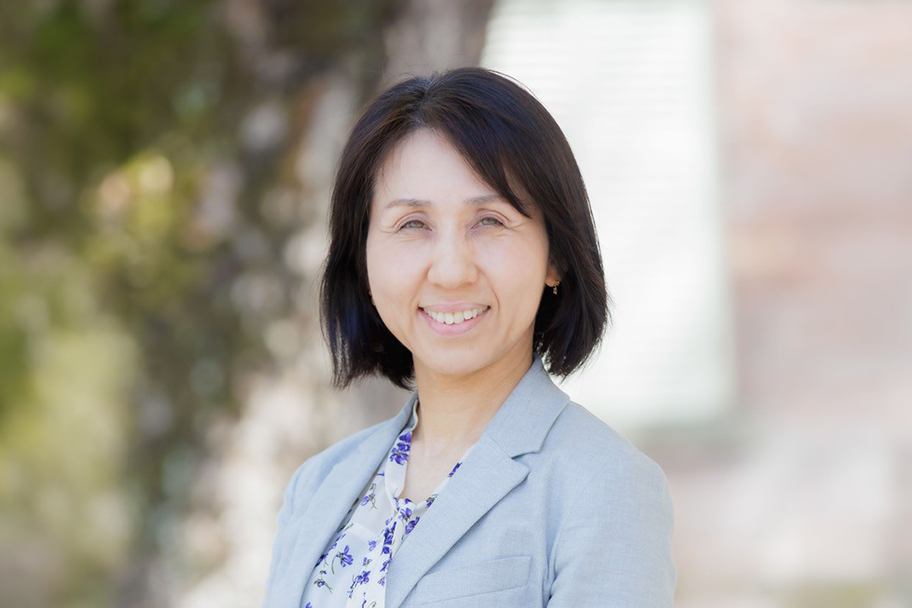
SATAKE Akiko
Professor, Faculty of Science, Kyushu University
Senior Program Officer, Biological Sciences Group, Research Center for Science Systems, Japan Society for the Promotion of Science (JSPS)
Biography
- Born in 1974. PhD of Science. Completed doctoral program at Faculty of Science, Kyushu University.
- JSPS Research Fellow-DC1 (1999)
- JSPS Research Fellow-PD (2002)
- JSPS Overseas Research Fellow (2005)
- Assistant professor, Graduate School of Environmental Sciences, Hokkaido University (2008)
- Associate professor, Graduate School of Environmental Sciences, Hokkaido University (2011)
- Associate professor, Faculty of Science, Kyushu University (2015)
- Assumed current position in 2018
- Senior Program Officer, Biological Sciences Group, Research Center for Science Systems, JSPS (2023-2026)
- Scheduled to become President of The Ecological Society of Japan in 2028.
Working Behind the Scenes to Enhance JSPS Programs and Initiatives
My role at the Research Center for Science Systems started toward the end of December 2022 when I was approached about serving as a Senior Program Officer at the Center. The invitation came unexpectedly from the Center’s secretariat rather than via a nomination by my university. I took the opportunity to speak with other members of the faculty who had previously served as program officers at Center and to learn about the nature of the Center’s work. Through those conversations, I came to understand that, while the position would entail significant responsibility, it would also be highly rewarding. So, I decided that I’d like to take on the role.
However, before formally accepting the appointment, I considered it important to obtain the understanding of my colleagues. I consulted with the faculty members in positions of responsible within my department at Kyushu University regarding the potential impact that my role at the Center could have on my university duties. Having received their understanding and approval, I ultimately decided to accept the appointment.
I assumed the position of Senior Program Officer in April 2023. At the same time, I took on the role of Principal Investigator for a large-scale Grant-in-Aid for Scientific Research (KAKENHI) project under its Transformative Research Areas (A) program. April and May of that year were truly one of the most challenging periods of my life. Now, three years later, having completed my tenure at the Research Center for Science Systems, I look back on my experience with a sense of profound gratitude. Overcoming the intense challenges posed by the position allowed me to grow significantly, both professionally and personally. The world looks much different to me now than it did before I became a Senior Program Officer at the Center.
Having benefited from KAKENHI funding since the time I was a Research Fellow and still in my research today, I’ve come to appreciate firsthand that these KAKENHI programs and the JSPS Research Fellowship for Young Scientists are bolstered by countless individuals—both administrative staff and researchers—who work tirelessly behind the scenes. Their efforts are largely invisible, yet indispensable. Now, I will describe the nature of my work at the Center, insofar as memory permits.
From April through early summer, my duties included selecting expert reviewer candidates for grant categories with early application deadlines, such as the International Leading Research program; attending panel review meetings for the KAKENHI grant category Challenging Research (Pioneering); and verifying the review process and selecting candidates for being review committee members for the category Grant-in-Aid for Scientific Research. JSPS has its own reviewer-selection system, through which the Center's program officers can view each researcher’s history of service as a reviewer, KAKENHI funding record, research achievements, and the results of past KAKENHI verification processes. Receiving careful guidance from senior researchers at the Center, I learned how to use the system and worked to identify reviewer candidates who could be relied upon to provide fair and high-quality evaluations.
I saw that within the research community there exists a positive feedback loop in which being favorably evaluated once leads to further favorable evaluations. I felt, however, that this could create a risk of the pool of review committee members becoming increasingly fixed over a course of time. With this in mind, I sought to actively identify researchers who may have had little previous experience as reviewers but whom I believed could be relied upon to provide fair, thoughtful, and accurate evaluations.
In addition to the duties I mentioned earlier, beginning in early summer, I became involved in the review process for the JSPS Prize and the preliminary screening for the Ikushi Prize. The applicants for these Prizes are all researchers with truly outstanding records of achievement in their respective fields. Having the opportunity to read the papers cited as evidence of the candidates’ research achievements was both an intellectually stimulating and invaluable experience for me. At the same time, I became keenly aware of the difficulty involved each year in selecting only a small number of nominees from among so many outstanding candidates. I tried to assess candidates not solely on the strength of their research achievements, but also on the extent to which their work could contribute to the future growth of Japanese scholarship and broaden the base of the scientific community.
After the field of candidates was narrowed, interviews for the Ikushi Prize were held in the fall. They were always filled with enthusiasm and featured fascinating presentations, making them one of the most memorable and rewarding parts of my work at the Center. This was also an opportunity for me to witness firsthand the steady progress achieved by young researchers and to get a sense of the future direction and potential of Japanese science. From autumn into winter, the pace of my work remained brisk, as KAKENHI briefing sessions coincided with attendance at and verification of panel reviews for major funding programs. Yet it was also a period rich in learning, during which I gained firsthand insight into the systems and processes that sustain scientific research in Japan.
By the end of the fiscal year, these duties also began to wind down, and a farewell gathering was held at the final Senior Program Officer meeting in March. Conversations and exchanges with researchers from a wide range of fields—including the humanities, social sciences, and natural sciences—as well as with members of the secretariat, continued as we found ourselves still engaged in conversation at a couple of after-parties, making the evening an exceptionally enjoyable and memorable time. In addition, the Biological Sciences Group holds scientific trend survey retreats in various parts of the country each March. In addition to research presentations by the Center’s program officers, participants engage in discussions that often continue late into the evening on issues such as KAKENHI reform, fostering young researchers, and the future direction of academia. At the retreats I attended, the atmosphere was vibrant and full of enthusiasm, evoking memories of the camaraderie I experienced in my high school club activities. As one of the still relatively small number of female professors at Kyushu University, I occasionally felt a little isolated. However, being able to share experiences and engage in open exchanges of diverse perspectives in settings like these, where the gender balance* was nearly equal, was an invaluable experience and a tremendous source of support for me personally.
I also felt that female researchers face a particularly high risk of seeing their own scientific careers suffer because they are frequently called upon to serve on numerous committees and to undertake administrative duties. However, meeting outstanding female researchers who, continued to produce world-class research while shouldering these essential behind-the-scenes roles, has also been a tremendous source of inspiration to me.
Beyond the responsibilities assigned to each program officer, I also took part in a range of meetings, including the Senior Program Officer Meetings, the KAKENHI Working Group, the JSPS Research Fellowship Working Group, and the KAKENHI Reform Task Force. These meetings gave me opportunities to engage in important discussions on reviewing and reforming current systems. They provided a forum for discussions from a broad perspective not only on trends in Japan but also global trends. Each meeting offered new insights on the challenges and changes taking place across a wide range of disciplines and research institutions.
In addition, Senior Program Officers regularly shared reports on emerging trends in their respective fields. These presentations gave me the opportunity to look beyond my own area of expertise and gain exposure to cutting-edge research and scientific developments across a wide range of disciplines—an experience that I found immensely valuable.
It is not possible for me to describe here differing aspects of the work I did during my tenure at the Center. Looking back, however, what stands out most are the many rewarding experiences I had along the way. Although I cannot say that I fulfilled every responsibility as well as I would have liked, I believe that I approached each task with sincerity and always did my utmost. To attend my final Senior Program Officer Meeting, I stayed overnight the day before in Kojimachi near JSPS’s office in Tokyo. As I stood outside the JSPS building and looked up at my office, which I had visited so many times over the years, I realized that the next day would be my last at the Research Center for Science Systems. While I welcomed the prospect of having more time to devote to my own research and to my students, I must admit that I also felt a quiet sense of sadness.
* As of FY2026, men accounted for 59.7% and women for 40.3%.
However, before formally accepting the appointment, I considered it important to obtain the understanding of my colleagues. I consulted with the faculty members in positions of responsible within my department at Kyushu University regarding the potential impact that my role at the Center could have on my university duties. Having received their understanding and approval, I ultimately decided to accept the appointment.
I assumed the position of Senior Program Officer in April 2023. At the same time, I took on the role of Principal Investigator for a large-scale Grant-in-Aid for Scientific Research (KAKENHI) project under its Transformative Research Areas (A) program. April and May of that year were truly one of the most challenging periods of my life. Now, three years later, having completed my tenure at the Research Center for Science Systems, I look back on my experience with a sense of profound gratitude. Overcoming the intense challenges posed by the position allowed me to grow significantly, both professionally and personally. The world looks much different to me now than it did before I became a Senior Program Officer at the Center.
Having benefited from KAKENHI funding since the time I was a Research Fellow and still in my research today, I’ve come to appreciate firsthand that these KAKENHI programs and the JSPS Research Fellowship for Young Scientists are bolstered by countless individuals—both administrative staff and researchers—who work tirelessly behind the scenes. Their efforts are largely invisible, yet indispensable. Now, I will describe the nature of my work at the Center, insofar as memory permits.
From April through early summer, my duties included selecting expert reviewer candidates for grant categories with early application deadlines, such as the International Leading Research program; attending panel review meetings for the KAKENHI grant category Challenging Research (Pioneering); and verifying the review process and selecting candidates for being review committee members for the category Grant-in-Aid for Scientific Research. JSPS has its own reviewer-selection system, through which the Center's program officers can view each researcher’s history of service as a reviewer, KAKENHI funding record, research achievements, and the results of past KAKENHI verification processes. Receiving careful guidance from senior researchers at the Center, I learned how to use the system and worked to identify reviewer candidates who could be relied upon to provide fair and high-quality evaluations.
I saw that within the research community there exists a positive feedback loop in which being favorably evaluated once leads to further favorable evaluations. I felt, however, that this could create a risk of the pool of review committee members becoming increasingly fixed over a course of time. With this in mind, I sought to actively identify researchers who may have had little previous experience as reviewers but whom I believed could be relied upon to provide fair, thoughtful, and accurate evaluations.
In addition to the duties I mentioned earlier, beginning in early summer, I became involved in the review process for the JSPS Prize and the preliminary screening for the Ikushi Prize. The applicants for these Prizes are all researchers with truly outstanding records of achievement in their respective fields. Having the opportunity to read the papers cited as evidence of the candidates’ research achievements was both an intellectually stimulating and invaluable experience for me. At the same time, I became keenly aware of the difficulty involved each year in selecting only a small number of nominees from among so many outstanding candidates. I tried to assess candidates not solely on the strength of their research achievements, but also on the extent to which their work could contribute to the future growth of Japanese scholarship and broaden the base of the scientific community.
After the field of candidates was narrowed, interviews for the Ikushi Prize were held in the fall. They were always filled with enthusiasm and featured fascinating presentations, making them one of the most memorable and rewarding parts of my work at the Center. This was also an opportunity for me to witness firsthand the steady progress achieved by young researchers and to get a sense of the future direction and potential of Japanese science. From autumn into winter, the pace of my work remained brisk, as KAKENHI briefing sessions coincided with attendance at and verification of panel reviews for major funding programs. Yet it was also a period rich in learning, during which I gained firsthand insight into the systems and processes that sustain scientific research in Japan.
By the end of the fiscal year, these duties also began to wind down, and a farewell gathering was held at the final Senior Program Officer meeting in March. Conversations and exchanges with researchers from a wide range of fields—including the humanities, social sciences, and natural sciences—as well as with members of the secretariat, continued as we found ourselves still engaged in conversation at a couple of after-parties, making the evening an exceptionally enjoyable and memorable time. In addition, the Biological Sciences Group holds scientific trend survey retreats in various parts of the country each March. In addition to research presentations by the Center’s program officers, participants engage in discussions that often continue late into the evening on issues such as KAKENHI reform, fostering young researchers, and the future direction of academia. At the retreats I attended, the atmosphere was vibrant and full of enthusiasm, evoking memories of the camaraderie I experienced in my high school club activities. As one of the still relatively small number of female professors at Kyushu University, I occasionally felt a little isolated. However, being able to share experiences and engage in open exchanges of diverse perspectives in settings like these, where the gender balance* was nearly equal, was an invaluable experience and a tremendous source of support for me personally.
I also felt that female researchers face a particularly high risk of seeing their own scientific careers suffer because they are frequently called upon to serve on numerous committees and to undertake administrative duties. However, meeting outstanding female researchers who, continued to produce world-class research while shouldering these essential behind-the-scenes roles, has also been a tremendous source of inspiration to me.
Beyond the responsibilities assigned to each program officer, I also took part in a range of meetings, including the Senior Program Officer Meetings, the KAKENHI Working Group, the JSPS Research Fellowship Working Group, and the KAKENHI Reform Task Force. These meetings gave me opportunities to engage in important discussions on reviewing and reforming current systems. They provided a forum for discussions from a broad perspective not only on trends in Japan but also global trends. Each meeting offered new insights on the challenges and changes taking place across a wide range of disciplines and research institutions.
In addition, Senior Program Officers regularly shared reports on emerging trends in their respective fields. These presentations gave me the opportunity to look beyond my own area of expertise and gain exposure to cutting-edge research and scientific developments across a wide range of disciplines—an experience that I found immensely valuable.
It is not possible for me to describe here differing aspects of the work I did during my tenure at the Center. Looking back, however, what stands out most are the many rewarding experiences I had along the way. Although I cannot say that I fulfilled every responsibility as well as I would have liked, I believe that I approached each task with sincerity and always did my utmost. To attend my final Senior Program Officer Meeting, I stayed overnight the day before in Kojimachi near JSPS’s office in Tokyo. As I stood outside the JSPS building and looked up at my office, which I had visited so many times over the years, I realized that the next day would be my last at the Research Center for Science Systems. While I welcomed the prospect of having more time to devote to my own research and to my students, I must admit that I also felt a quiet sense of sadness.
* As of FY2026, men accounted for 59.7% and women for 40.3%.
Helmsman Steering the Course of Future Science
I felt the Research Center for Science Systems to be a kind of navigator piloting a large ship in a direction toward the future of Japanese science. Now, as new technologies such as AI continue to spread and science itself stands on the verge of major transformation, the importance of an organization like the Center becomes greater than ever. By reexamining existing systems while keeping a keen eye on the future, the Center will work to design mechanisms that unlock the full potential of scientific research. For three years, I had been fortunate enough to be a mere crew member aboard that ship. My experience of working inside the Center gave me a deep appreciation of the significance and importance of the role that researchers themselves can play in designing systems for allocating research funding. Going forward, I will draw on this experience as I continue to press ahead in my own work.

A scene from a meeting at at the Research Center for Science Systems.
Support and Encouragement Cultivates Science
I entered academia because I love doing science. During my three years of serving as a program officer at the Research Center for Science Systems, I came to realize that creating the environments and systems that enable researchers to fully exercise their abilities and conduct excellent science is itself deeply rewarding and intellectually engaging work. It was also work that gave me a sense of optimism: rather than assuming that organizations are incapable of change, I saw how positive transformation can emerge when small connections and collaborations accumulate over time. Concerns that Japan’s research capacity is declining have been voiced over recent years. My own insight is that Japanese researchers possess exceptional scientific ability, originality, and technical expertise, and that they continue to enjoy a high level of trust and respect throughout the international community. Through my involvement at the Center in various review and evaluation processes, I was struck by the remarkable diversity of interests held among early-career researchers. I came away with a strong sense that their intensity of curiosity and spirit of inquiry will lead Japan’s research to major discoveries in the future. Toward fostering such potential, the Japan Society for the Promotion of Science provides a wide range of programs and initiatives that create environments in which talent can fully flourish and research communities form that foster confidence in each researcher while interconnecting their strengths. It`s my believe that when efforts such as these cause researchers to genuinely feel supported and encouraged, the path is paved toward creating ever-better science.
[ Voices of Researchers: Special Content Accompanying the JSPS Brochure ]
Explore more interviews in "Voices of Researchers"!
Dr.SAKAGUCHI Shimon | Dr. KITAGAWA Susumu | Dr. MINAMIDA Akemi | Dr. MAENO Ould Koutaro | Dr. SATAKE Akiko
Explore more interviews in "Voices of Researchers"!
Dr.SAKAGUCHI Shimon | Dr. KITAGAWA Susumu | Dr. MINAMIDA Akemi | Dr. MAENO Ould Koutaro | Dr. SATAKE Akiko
JSPS Brochure
The brochure containing the Researcher Interviews is available at the following link.
・JSPS Brochure 2026-2027 (PDF/2.2MB)
The brochure containing the Researcher Interviews is available at the following link.
・JSPS Brochure 2026-2027 (PDF/2.2MB)
Please follow us for the latest news!