


JSPS Topics
Special Content
Dr. MAENO Ould Koutaro|Voices of Researchers
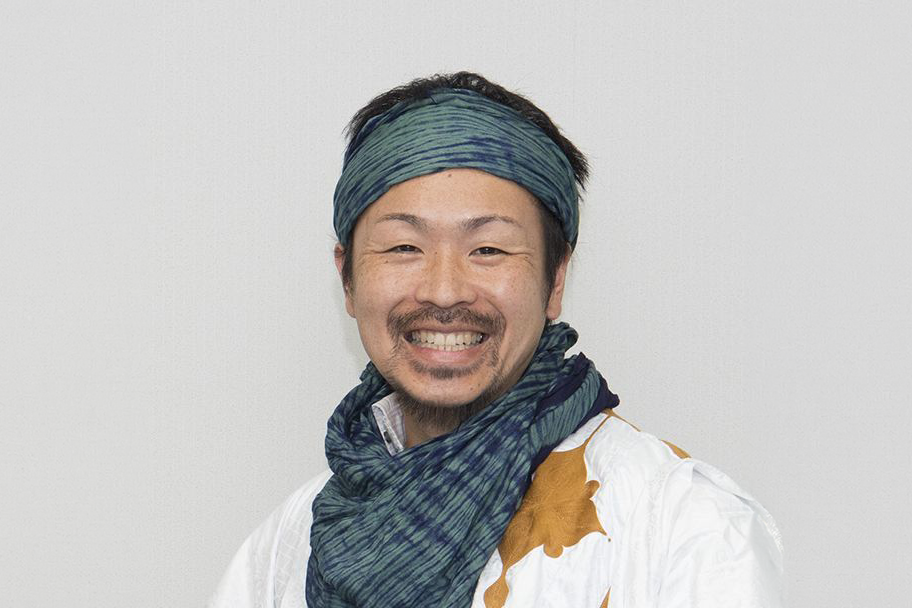
MAENO Ould Koutaro
Senior Researcher, Livestock and Environment Division, Japan International Research Center for Agricultural Sciences
Biography
Research Theme
Development of control technologies for the desert locust in Africa
- Born in 1980. PhD of Agriculture. Completed doctoral program at the Graduate School of Science and Technology, Kobe University.
- JSPS Research Fellow-DC2 (2006)
- JSPS Research Fellow-PD (2008)
- JSPS Overseas Research Fellow (2011)
- Program-Specific Assistant Professor, Hakubi Center, Kyoto University (2014)
- Researcher, Livestock and Environment Division, Japan International Research Center for Agricultural Sciences (2016)
- Assumed current position in 2021
- Recipient of the 19th Japan Prize in Agricultural Sciences, Achievement Award for Young Scientists (2017)
- Recipient of the Chinguitt Prize (Islamic Republic of Mauritania, Science and Technology, 2020)
- Recipient of the 19th JSPS Prize (2023)
- His book Going to Africa to Take Down Locusts received the Shinsho Grand Prize in 2018, and Taking Down Locusts in Africa awarded the Grand Prize of the Science Journalists Award in 2025
Research Theme
Development of control technologies for the desert locust in Africa
Research on the behavior and reproductive ecology of the desert locust in Africa
Since ancient times, outbreaks of the desert locust have occurred repeatedly across Africa, devastating crops and causing widespread damage. To help mitigate this damage, I conducted fieldwork in the Sahara Desert in Mauritania, West Africa, over a period of nine years, investigating the behavior and reproductive ecology of desert locusts in their natural habitat. At the time, very little was known about how desert locusts reproduce in the wild. Through my field studies, however, I discovered a unique reproductive system in which sexually mature males and females live separately. Shortly before laying eggs, the females fly to aggregations of males to mate and then, at night, gather in groups to lay their eggs in the soil. I found that this unique reproductive system minimizes excessive sexual conflict between males and females, allowing reproduction to proceed efficiently.
I also found that, during oviposition, large numbers of locusts aggregate at the same site and remain there for several hours. By taking advantage of this behavior, I found that control techniques could be implemented precisely when and where locusts aggregate, leading to the development of pest management strategies that minimize pesticide use and reduce environmental and human impacts.
In addition, my field studies revealed phenomena that could not be observed through laboratory experiments alone, including the behavioral mechanisms by which desert locusts regulate their body temperature in the harsh desert environment and coordinate movement in large swarms. These findings have advanced our understanding of the mechanisms underlying desert locust outbreaks while providing a scientific foundation for the development of sustainable control technologies.
I also found that, during oviposition, large numbers of locusts aggregate at the same site and remain there for several hours. By taking advantage of this behavior, I found that control techniques could be implemented precisely when and where locusts aggregate, leading to the development of pest management strategies that minimize pesticide use and reduce environmental and human impacts.
In addition, my field studies revealed phenomena that could not be observed through laboratory experiments alone, including the behavioral mechanisms by which desert locusts regulate their body temperature in the harsh desert environment and coordinate movement in large swarms. These findings have advanced our understanding of the mechanisms underlying desert locust outbreaks while providing a scientific foundation for the development of sustainable control technologies.

Group of sexually mature desert locusts, showing mating male–female pairs
Photo provided by MAENO Ould Koutaro
Photo provided by MAENO Ould Koutaro
Provides Support both Within Japan and In the Field
The JSPS Prize is the highest academic distinction in Japan to which young researchers could aspire, and I had always regarded it as something far beyond my reach. Knowing that there were many researchers whose achievements far surpassed my own, I felt deeply humbled when receiving the news of the award. I believe this award recognized not only the quality and quantity of my research publications, but also of my fieldwork in the Sahara Desert—where few Japanese researchers had previously conducted research—the demanding nature of that work, my international activities, and my efforts to communicate science to the public through books. I consider it to be a recognition of my overall contributions, both as a researcher and as a member of society. Feeling that the award recognized the challenges I had pursed over many years, it strengthened my resolve to become a researcher worthy of this distinction.
Through support from JSPS, I was also able to build an international research network with collaborators in Africa and Europe, which has become a major foundation for my research activities today. As a researcher, I truly feel that I have been nurtured through JSPS’s support programs. At my institution, I was fortunate to be congratulated by many colleagues on receiving the award. It also gave me an opportunity to express my gratitude not only to my fellow researchers, but also to the staff members who support our research activities every day. This reminds me that research is never accomplished alone, but is made possible through the support of many people.
My father also attended the award ceremony, at which, we were fortunate to have the opportunity to speak with Their Imperial Highnesses Crown Prince and Crown Princess Akishino. It was an unforgettable moment, one in which I felt I could give something nice back to my parents.
The fact that my research on the desert locust—conducted in Africa, far from Japan—was recognized in Japan has also been a source of encouragement to my colleagues and collaborators in the world. I hope this award will inspire researchers both in Japan and abroad, as well as young people who aspire to pursue a career in research. Deeply grateful for the support I received from JSPS on my path to becoming a researcher, I will continue to dedicate myself to research while never losing sight of the joy and privilege of being able to pursue it.
Through support from JSPS, I was also able to build an international research network with collaborators in Africa and Europe, which has become a major foundation for my research activities today. As a researcher, I truly feel that I have been nurtured through JSPS’s support programs. At my institution, I was fortunate to be congratulated by many colleagues on receiving the award. It also gave me an opportunity to express my gratitude not only to my fellow researchers, but also to the staff members who support our research activities every day. This reminds me that research is never accomplished alone, but is made possible through the support of many people.
My father also attended the award ceremony, at which, we were fortunate to have the opportunity to speak with Their Imperial Highnesses Crown Prince and Crown Princess Akishino. It was an unforgettable moment, one in which I felt I could give something nice back to my parents.
The fact that my research on the desert locust—conducted in Africa, far from Japan—was recognized in Japan has also been a source of encouragement to my colleagues and collaborators in the world. I hope this award will inspire researchers both in Japan and abroad, as well as young people who aspire to pursue a career in research. Deeply grateful for the support I received from JSPS on my path to becoming a researcher, I will continue to dedicate myself to research while never losing sight of the joy and privilege of being able to pursue it.
The Power of Passion, Support, Detours, and Failure in Research
To become a researcher, you must do research. However, I have come to feel that the detours I took—writing books and engaging in public outreach, among other activities outside of research—were, in fact, another path that eventually led me to a research career. As a postdoctoral researcher, I staked my career on conducting research in the Sahara Desert. In the field, I faced one setback after another: the local language proved difficult, the locusts sometimes did not appear, and I even found myself without an income. Despite these setbacks, I was determined to carry on my research. Because the desert locust problem in Africa was largely unfamiliar in Japan, I made a point of communicating its negative impact and need for solutions through a blog, public talks, and other outreach efforts. Having many supporters learn about the challenges I was taking on and encouraging me, gave me confidence to keep going during a time when the future of my career was uncertain.
Research is not driven by efficiency alone. What sustained me through periods of uncertainty were the experiences that at first seemed like detours, the lessons learned from failure, my passion for research, and the support of those around me.
Research is not driven by efficiency alone. What sustained me through periods of uncertainty were the experiences that at first seemed like detours, the lessons learned from failure, my passion for research, and the support of those around me.
[ Voices of Researchers: Special Content Accompanying the JSPS Brochure ]
Explore more interviews in "Voices of Researchers"!
Dr.SAKAGUCHI Shimon | Dr. KITAGAWA Susumu | Dr. MINAMIDA Akemi | Dr. MAENO Ould Koutaro | Dr. SATAKE Akiko
Explore more interviews in "Voices of Researchers"!
Dr.SAKAGUCHI Shimon | Dr. KITAGAWA Susumu | Dr. MINAMIDA Akemi | Dr. MAENO Ould Koutaro | Dr. SATAKE Akiko
JSPS Brochure
The brochure containing the Researcher Interviews is available at the following link.
・JSPS Brochure 2026-2027 (PDF/2.2MB)
The brochure containing the Researcher Interviews is available at the following link.
・JSPS Brochure 2026-2027 (PDF/2.2MB)
Please follow us for the latest news!