


JSPS Topics
Special Content
Dr. MINAMIDA Akemi|Voices of Researchers
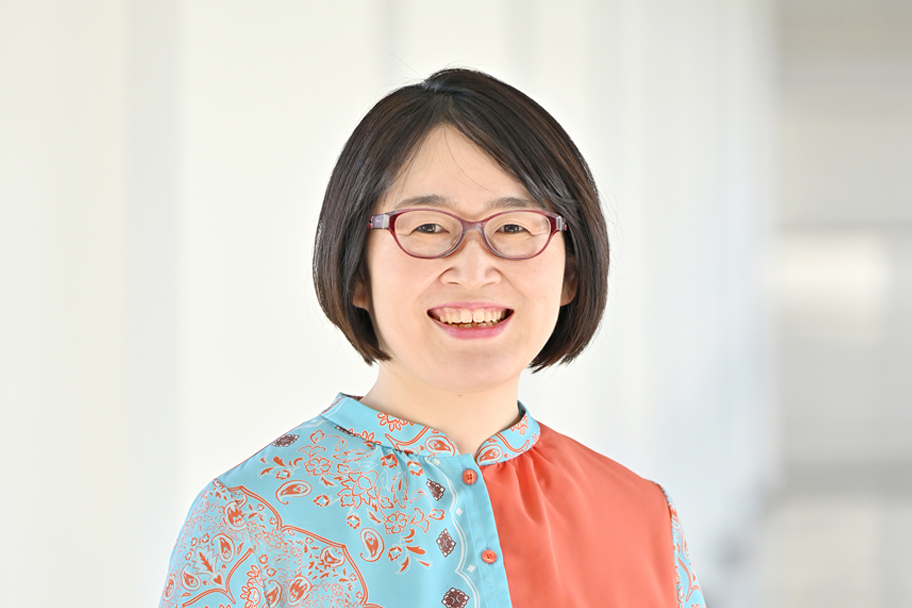
MINAMIDA Akemi
Associate Professor, Department of Art Management, Faculty of Cultural Policy and Management, Shizuoka University of Art and Culture
Biography
Research Theme
A history of community art contributing to multicultural coexistence in Japan and Singapore: Focusing on the institutional frameworks and bliefs of the people involved
- Born in 1985. Doctor of Philosophy. Completed doctoral program at the Graduate School of Intercultural Studies, Kobe University.
- JSPS Research Fellow-DC2 (2016)
- Research and Educational Associate, Osaka College of Music (2018)
- JSPS Research Fellow-PD (2020)
- Part-time Lecturer, Kyushu University (2020)
- Lecturer, Faculty of Cultural Policy and Management, Department of Art Management, Shizuoka University of Art and Culture (2022)
- Appointed current position in 2026
Research Theme
A history of community art contributing to multicultural coexistence in Japan and Singapore: Focusing on the institutional frameworks and bliefs of the people involved
Investigate arts and cultural activities in Singapore that contribute to multicultural social cohesion.
Drawing on my experiences growing up in a local community and as a young carer, I had become deeply interested in artistic practices that contribute to multicultural coexistence. This interest has been driven by the question, " How can we create cultural commons through the arts where everyone feels at home and free to be themselves?“
To explore this question, during my tenure as a JSPS Research Fellow (DC2), I investigated the history of Singapore's community arts movement and the institutional frameworks that have supported its development. The relatively little research existing on Singapore's cultural policy and artistic activities at the time made it necessary to do fieldwork. To this end, I collected archival materials at the National Library Singapore and the National Archives of Singapore, while also conducting interviews with leaders of grassroots organizations (neighborhood associations and residents’ associations in Singapore) and with government officials who had played key roles in supporting the movement. I also took part in community art projects as a volunteer.
As a JSPS Research Fellow (PD), I built on my DC2 research by comparing Japan and Singapore, focusing on older adults and their families, to examine approaches to inclusive arts and cultural policy. This research was inspired by the many older adults I encountered in Singapore who, despite having diverse linguistic, cultural, and religious backgrounds, were actively forming arts groups and engaging in their activities. It also stemmed from the many older adults whom I saw participating in community art in wheelchairs while accompanied by foreign domestic workers. Following my selection as a JSPS Research Fellow (PD), I was awarded an overseas research placement at the Cultural Research Centre, National University of Singapore. However, the COVID-19 pandemic prevented me from conducting that planned fieldwork in Singapore. Drawing upon my background as a conservatory graduate, I instead carried out monthly action research through music-based activities at senior care facilities in Japan’s Kansai region, known for its strong commitment to music programs. I interviewed the musicians working with the facilities. My analysis revealed both the guiding principles underlying their music workshops for older adults and the institutional challenges surrounding arts and cultural policy. I presented these research findings at international academic conferences.
To explore this question, during my tenure as a JSPS Research Fellow (DC2), I investigated the history of Singapore's community arts movement and the institutional frameworks that have supported its development. The relatively little research existing on Singapore's cultural policy and artistic activities at the time made it necessary to do fieldwork. To this end, I collected archival materials at the National Library Singapore and the National Archives of Singapore, while also conducting interviews with leaders of grassroots organizations (neighborhood associations and residents’ associations in Singapore) and with government officials who had played key roles in supporting the movement. I also took part in community art projects as a volunteer.
As a JSPS Research Fellow (PD), I built on my DC2 research by comparing Japan and Singapore, focusing on older adults and their families, to examine approaches to inclusive arts and cultural policy. This research was inspired by the many older adults I encountered in Singapore who, despite having diverse linguistic, cultural, and religious backgrounds, were actively forming arts groups and engaging in their activities. It also stemmed from the many older adults whom I saw participating in community art in wheelchairs while accompanied by foreign domestic workers. Following my selection as a JSPS Research Fellow (PD), I was awarded an overseas research placement at the Cultural Research Centre, National University of Singapore. However, the COVID-19 pandemic prevented me from conducting that planned fieldwork in Singapore. Drawing upon my background as a conservatory graduate, I instead carried out monthly action research through music-based activities at senior care facilities in Japan’s Kansai region, known for its strong commitment to music programs. I interviewed the musicians working with the facilities. My analysis revealed both the guiding principles underlying their music workshops for older adults and the institutional challenges surrounding arts and cultural policy. I presented these research findings at international academic conferences.
Credibility Conferred by the Title of JSPS Research Fellow
By way of my JSPS Research Fellowship (DC2), I was accepted as a Visiting Fellow at Nanyang Technological University (NTU), where I was able to undertake an extended period of field research. This experience became one of the greatest assets of my academic career. The experience proved invaluable as it was during this fieldwork that I first encountered the concept of "care," a value deeply rooted in Singaporean society. I also came to recognize the importance of arts practitioners who embody this ethos—an insight that has become the foundation of my current research.
Being able to identify myself as a JSPS Research Fellow not only provided me with financial stability and greater confidence, but also helped me to earn the trust of local people as a researcher. I had been conducting fieldwork in Singapore since my master’s program, but as a “foreign” researcher and an “outsider” with no prior ties or established local networks there, I was sometimes turned down when I requested interviews and other forms of research cooperation from government agencies. I believe this was because my research dealt with issues concerning racial harmony, a topic that the Singaporean government treats with particular sensitivity. However, when I carefully explained my research and identified myself as both a JSPS Research Fellow and a Visiting Fellow at NTU, I was able to gain their trust, and doors that had previously been closed were opened to me. As a result, I was able to build connections with members of the local community, participate in a wide range of arts activities, and learn from their experiences through conversations and interviews. I also believe that the public disclosure of information about my research through posting in the KAKEN Database further enhanced my credibility as a researcher.
My experience as a JSPS Research Fellow (DC2) laid the foundation for my subsequent work as a JSPS Research Fellow (PD), various KAKENHI-funded research projects, and my arts-based research. In particular, the Hamamatsu Multicultural Music Project—an arts-based research initiative that I began after joining my current university to create a place of belonging through music for children with international backgrounds in Hamamatsu—owes its very conception to the experiences I had in Singapore as a JSPS Research Fellow (DC2).
Being able to identify myself as a JSPS Research Fellow not only provided me with financial stability and greater confidence, but also helped me to earn the trust of local people as a researcher. I had been conducting fieldwork in Singapore since my master’s program, but as a “foreign” researcher and an “outsider” with no prior ties or established local networks there, I was sometimes turned down when I requested interviews and other forms of research cooperation from government agencies. I believe this was because my research dealt with issues concerning racial harmony, a topic that the Singaporean government treats with particular sensitivity. However, when I carefully explained my research and identified myself as both a JSPS Research Fellow and a Visiting Fellow at NTU, I was able to gain their trust, and doors that had previously been closed were opened to me. As a result, I was able to build connections with members of the local community, participate in a wide range of arts activities, and learn from their experiences through conversations and interviews. I also believe that the public disclosure of information about my research through posting in the KAKEN Database further enhanced my credibility as a researcher.
My experience as a JSPS Research Fellow (DC2) laid the foundation for my subsequent work as a JSPS Research Fellow (PD), various KAKENHI-funded research projects, and my arts-based research. In particular, the Hamamatsu Multicultural Music Project—an arts-based research initiative that I began after joining my current university to create a place of belonging through music for children with international backgrounds in Hamamatsu—owes its very conception to the experiences I had in Singapore as a JSPS Research Fellow (DC2).

Community Arts Program in Elderly Care Centre in Singapore
Photo provided by MINAMIDA Akemi
Photo provided by MINAMIDA Akemi
Enjoy new encounters and opportunities as you pursue your own path in research
The JSPS Research Fellowship ("Gakushin") is widely recognized as a gateway to becoming a researcher. If you are a graduate student reading this website, you may have heard senior researchers say that "selection for the JSPS Research Fellowship is highly competitive," and may be wondering whether to apply. In fact, one of my former students, now at another university, recently came to me to ask for advice about applying for the fellowship. I told him, if you take on the challenge and are selected, you will find even more inspiring people, experiences, and research opportunities beyond anything you have encountered before.
Research does not produce results overnight, and there will likely be times when you feel as though you are struggling alone. I have seen many people step away from a career in research. Even so, I believe that if you can meet adversity with a smile, continue to find joy in the journey, and keep the desire to make the world just a little brighter, doors will open, and you will find your way forward.
Research topics and the ways researchers contribute to society vary widely across disciplines, but one thing is universal: a rich research environment is built by the people around you. I hope you will wholeheartedly embrace new encounters and opportunities, and forge your own path as a researcher.
Research does not produce results overnight, and there will likely be times when you feel as though you are struggling alone. I have seen many people step away from a career in research. Even so, I believe that if you can meet adversity with a smile, continue to find joy in the journey, and keep the desire to make the world just a little brighter, doors will open, and you will find your way forward.
Research topics and the ways researchers contribute to society vary widely across disciplines, but one thing is universal: a rich research environment is built by the people around you. I hope you will wholeheartedly embrace new encounters and opportunities, and forge your own path as a researcher.
[ Voices of Researchers: Special Content Accompanying the JSPS Brochure ]
Explore more interviews in "Voices of Researchers"!
Dr.SAKAGUCHI Shimon | Dr. KITAGAWA Susumu | Dr. MINAMIDA Akemi | Dr. MAENO Ould Koutaro | Dr. SATAKE Akiko
Explore more interviews in "Voices of Researchers"!
Dr.SAKAGUCHI Shimon | Dr. KITAGAWA Susumu | Dr. MINAMIDA Akemi | Dr. MAENO Ould Koutaro | Dr. SATAKE Akiko
JSPS Brochure
The brochure containing the Researcher Interviews is available at the following link.
・JSPS Brochure 2026-2027 (PDF/2.2MB)
The brochure containing the Researcher Interviews is available at the following link.
・JSPS Brochure 2026-2027 (PDF/2.2MB)
Please follow us for the latest news!