


JSPS Topics
Special Content
Dr. SAKAGUCHI Shimon|Voices of Researchers
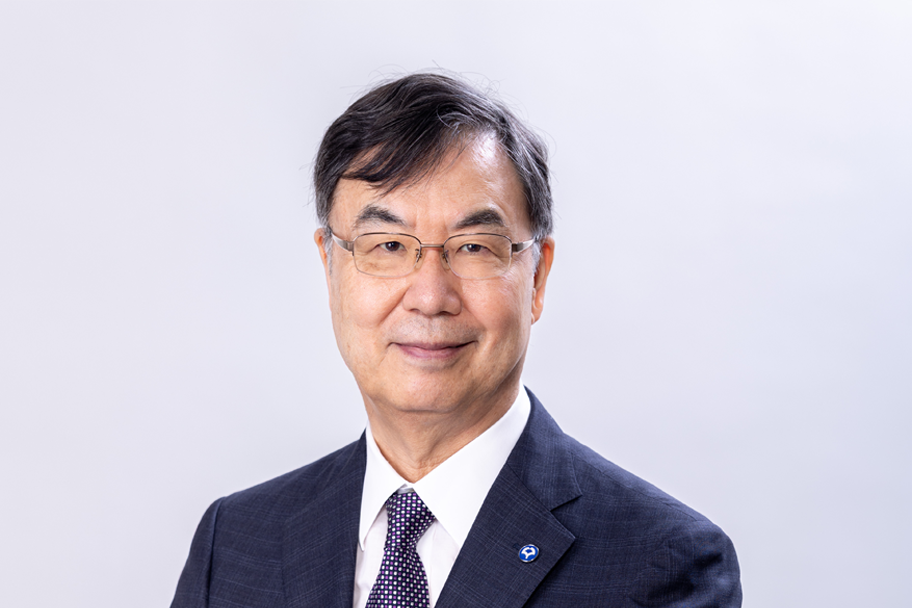
SAKAGUCHI Shimon
Specially Appointed Professor, Immunology Frontier Research Center (WPI-IFReC), The University of Osaka
Biography
Research Theme
Mechanisms of regulatory T cell development, differentiation, and function, and their application to the treatment of immune disorders
- Born in 1951. Ph.D of Medicine. Faculty of Medicine, Kyoto University.
- Head of the Department of Immunopathology, Tokyo Metropolitan Institute of Gerontology (1995)
- Professor and Chair, Department of Experimental Pathology, Institute for Frontier Medical Sciences, Kyoto University (1999)
- Professor, Immunology Frontier Research Center (WPI-IFReC), The University of Osaka (2011)
- Assumed current position in 2013
- Nobel Prize in Physiology or Medicine (2025)
Research Theme
Mechanisms of regulatory T cell development, differentiation, and function, and their application to the treatment of immune disorders
Three Decades of Immunology Research Supported by KAKENHI
Looking back on my research career, my relationship with Grants-in-Aid for Scientific Research (KAKENHI) dates back some 30 years to when I returned to Japan after spending about a decade in the United States and received my first KAKENHI grant at the Tokyo Metropolitan Institute of Gerontology. The reason for my return to Japan was that I had been selected for a PRESTO research project under the Japan Science and Technology Corporation—now the Japan Science and Technology Agency. The project had been launched following a recommendation by Dr. Susumu Tonegawa after he received the Nobel Prize. Since then, I have received continuous support through KAKENHI programs—including a Grant-in-Aid for Scientific Research on Priority Areas*, a Grant-in-Aid for Specially Promoted Research, and a Grant-in-Aid for Scientific Research at Kyoto University and the University of Osaka. Throughout my career, the KAKENHI program has served as the bedrock of my research, enabling me to sustain my work on a stable and ongoing basis. Having a stable source of funding for ongoing research enabled me to continue my work without interruption. I believe that many of my new ideas and subsequent research directions grew out of that continuity.
The WPI program led me to the University of Osaka and changed the course of my career. It fundamentally transformed both my research environment and the institutional framework within which I conducted my research. At the Immunology Frontier Research Center (WPI-IFReC), the University of Osaka, where I am currently based, stable funding has enabled us to provide secure, long-term employment for our staff. It has also allowed us to expand the size of the laboratory and to offer relatively long-term appointments for associate professors, assistant professors, and other research personnel. Moving beyond reliance on short-term postdoctoral appointments, we were able to establish a framework for developing researchers in stable positions over a sustained period while supporting their long-term career development. This has been invaluable in both advancing research and fostering the next generation of researchers.
* Grant-in-Aid for Scientific Research on Priority Areas administered by the Ministry of Education, Culture, Sports, Science and Technology (MEXT)
The WPI program led me to the University of Osaka and changed the course of my career. It fundamentally transformed both my research environment and the institutional framework within which I conducted my research. At the Immunology Frontier Research Center (WPI-IFReC), the University of Osaka, where I am currently based, stable funding has enabled us to provide secure, long-term employment for our staff. It has also allowed us to expand the size of the laboratory and to offer relatively long-term appointments for associate professors, assistant professors, and other research personnel. Moving beyond reliance on short-term postdoctoral appointments, we were able to establish a framework for developing researchers in stable positions over a sustained period while supporting their long-term career development. This has been invaluable in both advancing research and fostering the next generation of researchers.
* Grant-in-Aid for Scientific Research on Priority Areas administered by the Ministry of Education, Culture, Sports, Science and Technology (MEXT)
Long-Term Support from Basic Research to Clinical Applications
Since returning to Japan after completing approximately ten years of research in the United States, I have pursued my research with concurrent support from multiple funding sources, including the KAKENHI program, WPI program, and Japan Agency for Medical Research and Development (AMED). For this reason, it is honestly difficult for me to draw a strict line between which research results stemmed from which form of support. At the same time, I believe that it was only through sustained research funding that I was able to continue and build upon my research following the publication of our 1995 study identifying regulatory T cells (Tregs). The scope of our Treg research broadened to include applications to human diseases such as autoimmune disorders and cancer. Behind this progress was support from the KAKENHI program and other funding sources that enabled us to continue our research without interruption, and this continuity contributed significantly to its advancement.
Looking back, I feel that my greatest achievement has not been a single major discovery. Rather, it has been the ability to advance my research step by step and to expand it beyond basic research toward work that can more directly benefit patients and address human disease. Much of the most creative basic research begins without a clear prospect of where it will lead, and in its early stages it often appears to produce little in the way of tangible results. Yet it is only when researchers have an environment that allows them to persevere through these early stages that their work can truly mature and lead to the next stage of discovery.
The basic operating funds allocated to national universities have been steadily declining over recent years, causing an increasingly limited pool of stable institutional funding available for research. Against this backdrop, Grants-in-Aid for Scientific Research (KAKENHI) have come to play an even more important role as the financial bedrock for researchers' work in Japan. The KAKENHI program supports the core cycle of research activity; that is, researchers articulate the significance of their work, receive support, produce results, and are evaluated on their achievements. In this sense, the program has become an indispensable mechanism for sustaining and advancing research.
In particular, a two-tier support structure is needed for fostering basic research. One tier provides broad support for research in its early stages, while the other focuses on projects that have begun to demonstrate potential and are moving into a phase of further advancement and increased competition.
Furthermore, the WPI program has directly enhanced our laboratory's organizational capacity and its ability to foster researchers over the long term. The program’s impact extends beyond research outcomes, as it works to build a robust research platform while enabling laboratory members to advance to the next stage of their careers. The ability to nurture researchers in stable positions over a sustained period, rather than limiting them to short-term appointments, has been invaluable in enhancing both the quality and the long-term sustainability of our research.
All of that said, I believe the KAKENHI program in Japan still faces a challenge with respect to research continuity. Since grants are generally limited to fixed funding periods, even highly successful projects must undergo a new competitive application process in order to secure support for their next phase. For research that has produced strong results and shown promise for further development, it is important to have mechanisms that appropriately evaluate its value and progress, while making it easier to continue work on the same theme or smoothly bridge it to the next stage. One way to achieve this would be to provide more flexible opportunities for grant applications in ways that make it easier to support research in accordance with its stage of advancement. I believe that such measures will become increasingly important in years ahead.
Looking back, I feel that my greatest achievement has not been a single major discovery. Rather, it has been the ability to advance my research step by step and to expand it beyond basic research toward work that can more directly benefit patients and address human disease. Much of the most creative basic research begins without a clear prospect of where it will lead, and in its early stages it often appears to produce little in the way of tangible results. Yet it is only when researchers have an environment that allows them to persevere through these early stages that their work can truly mature and lead to the next stage of discovery.
The basic operating funds allocated to national universities have been steadily declining over recent years, causing an increasingly limited pool of stable institutional funding available for research. Against this backdrop, Grants-in-Aid for Scientific Research (KAKENHI) have come to play an even more important role as the financial bedrock for researchers' work in Japan. The KAKENHI program supports the core cycle of research activity; that is, researchers articulate the significance of their work, receive support, produce results, and are evaluated on their achievements. In this sense, the program has become an indispensable mechanism for sustaining and advancing research.
In particular, a two-tier support structure is needed for fostering basic research. One tier provides broad support for research in its early stages, while the other focuses on projects that have begun to demonstrate potential and are moving into a phase of further advancement and increased competition.
Furthermore, the WPI program has directly enhanced our laboratory's organizational capacity and its ability to foster researchers over the long term. The program’s impact extends beyond research outcomes, as it works to build a robust research platform while enabling laboratory members to advance to the next stage of their careers. The ability to nurture researchers in stable positions over a sustained period, rather than limiting them to short-term appointments, has been invaluable in enhancing both the quality and the long-term sustainability of our research.
All of that said, I believe the KAKENHI program in Japan still faces a challenge with respect to research continuity. Since grants are generally limited to fixed funding periods, even highly successful projects must undergo a new competitive application process in order to secure support for their next phase. For research that has produced strong results and shown promise for further development, it is important to have mechanisms that appropriately evaluate its value and progress, while making it easier to continue work on the same theme or smoothly bridge it to the next stage. One way to achieve this would be to provide more flexible opportunities for grant applications in ways that make it easier to support research in accordance with its stage of advancement. I believe that such measures will become increasingly important in years ahead.

Regulatory T cells (shown in brown) infiltrating colorectal cancer tissue
Photo courtesy of SAKAGUCHI Shimon
Photo courtesy of SAKAGUCHI Shimon
Stay positive, persevere, and keep working
I believe the most important thing in research is to pursue, over the long term, a question that you yourself believe is important and to continue exploring it in depth. New insights and discoveries rarely appear all at once; rather, they gradually take shape through the accumulation of daily trial and error.
It is also important to create an environment in which your research can thrive. To secure the support you need, you must be able to clearly articulate the significance of your work, communicate it effectively to others, and continue moving forward while learning from the evaluations and feedback you receive. There will inevitably be periods when your research does not go as planned. When that happens, do not give up too easily. Stay committed, persevere, and keep working. It is through that persistence that your research will mature, opening the door to new directions and, ultimately, to meaningful discoveries.
To you who aspire to a career in research, my advice is simple: stay positive, persevere, and keep doing the work. If you keep these principles in mind and devote yourself to your research, you will give yourself the best chance of making discoveries that truly matter.
Finally, your confidence—or lack of it—will inevitably come through in your writing, including your grant proposals. Rather than forcing yourself to pursue a topic simply because it follows the crowd, put into words the significance of the research you truly believe in, and keep moving forward with patience and determination.
It is also important to create an environment in which your research can thrive. To secure the support you need, you must be able to clearly articulate the significance of your work, communicate it effectively to others, and continue moving forward while learning from the evaluations and feedback you receive. There will inevitably be periods when your research does not go as planned. When that happens, do not give up too easily. Stay committed, persevere, and keep working. It is through that persistence that your research will mature, opening the door to new directions and, ultimately, to meaningful discoveries.
To you who aspire to a career in research, my advice is simple: stay positive, persevere, and keep doing the work. If you keep these principles in mind and devote yourself to your research, you will give yourself the best chance of making discoveries that truly matter.
Finally, your confidence—or lack of it—will inevitably come through in your writing, including your grant proposals. Rather than forcing yourself to pursue a topic simply because it follows the crowd, put into words the significance of the research you truly believe in, and keep moving forward with patience and determination.
[ Voices of Researchers: Special Content Accompanying the JSPS Brochure ]
Explore more interviews in "Voices of Researchers"!
Dr.SAKAGUCHI Shimon | Dr. KITAGAWA Susumu | Dr. MINAMIDA Akemi | Dr. MAENO Ould Koutaro | Dr. SATAKE Akiko
Explore more interviews in "Voices of Researchers"!
Dr.SAKAGUCHI Shimon | Dr. KITAGAWA Susumu | Dr. MINAMIDA Akemi | Dr. MAENO Ould Koutaro | Dr. SATAKE Akiko
JSPS Brochure
The brochure containing the Researcher Interviews is available at the following link.
・JSPS Brochure 2026-2027 (PDF/2.2MB)
The brochure containing the Researcher Interviews is available at the following link.
・JSPS Brochure 2026-2027 (PDF/2.2MB)
Please follow us for the latest news!