

International Prize for Biology
The 42nd (2026) recipient
The 42nd (2026) International Prize for Biology is awarded
to
Dr. Sharon Rugel Long
Steere-Pfizer Professor of Biological Sciences, Department of Biology – Stanford University, USA
to
Dr. Sharon Rugel Long
Steere-Pfizer Professor of Biological Sciences, Department of Biology – Stanford University, USA
On July 10, the Committee on the International Prize for Biology (chaired by Dr. FUJIYOSHI Yoshinori, Specially Appointed Professor, Institute of Science Tokyo) decided to award the 42nd (2026) International Prize for Biology to Dr. Sharon Rugel Long, Steere-Pfizer Professor of Biological Sciences, Department of Biology – Stanford University, USA.This year’s Prize is awarded in the field of "Biology of Symbiosis (interspecific interactions). "
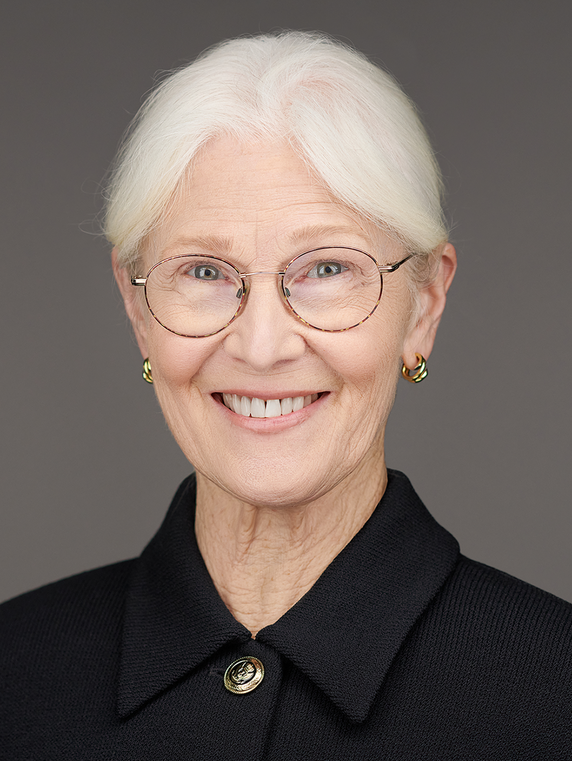
Dr. Sharon Rugel Long
YEAR OF BIRTH: 1951
NATIONALITY: United States of America
PRESENT POSITION: Steere-Pfizer Professor of Biological Sciences, Department of Biology – Stanford University
Biography and research achievements of the recipient
YEAR OF BIRTH: 1951
NATIONALITY: United States of America
PRESENT POSITION: Steere-Pfizer Professor of Biological Sciences, Department of Biology – Stanford University
Biography and research achievements of the recipient
Dr. Sharon Rugel Long, Professor of Biology at Stanford University, USA, elucidated the mechanism by which rhizobia (a group of bacteria that live symbiotically in the roots of leguminous plants) and host plants recognize one another as appropriate partners and establish a relationship known as root nodule symbiosis. Leguminous plants are able to utilize atmospheric nitrogen gas as a nutrient source, even though most organisms cannot use it directly. This capability derives from their symbiotic association with rhizobia, which inhabit root nodules formed on the host plant’s roots, fix molecular nitrogen, and supply the fixed nitrogen to the host plant as a source of nitrogen nutrition. This symbiotic relationship exhibits host specificity: Although alfalfa and pea are both leguminous plants, alfalfa rhizobia can establish a symbiotic relationship with alfalfa, whereas they are unable to form symbiosis with pea. When Dr. Long began her research, little was known about the molecular mechanisms by which rhizobia and leguminous plants recognize one another and establish root nodule symbiosis. Through molecular genetics, biochemical, and cell biological studies of both rhizobia and their host plants, Dr. Long elucidated the mechanisms underlying host specificity.
Dr. Long demonstrated that flavonoids secreted by host plant roots induce the expression of the rhizobial nod genes required for symbiosis. She also made major contributions to the study of Nod factors, the bacterial signal molecules synthesized by enzymes encoded by nod genes, and to the elucidation of their function. For example, luteolin, a flavonoid secreted by alfalfa, induces nod gene expression in alfalfa rhizobia, whereas flavonoids secreted by other plants lack this inducing activity. In other words, these findings demonstrated that flavonoids secreted by host plants trigger the synthesis of Nod factors in their rhizobial partners.
Dr. Long also made major contributions to elucidating the effects of Nod factors on host plants. The structure of Nod factors differs among rhizobial species. She discovered that the Nod factors produced by alfalfa rhizobia trigger periodic fluctuations in intracellular calcium ion concentrations (calcium spiking) in the cells of alfalfa roots. By contrast, Nod factors produced by other rhizobial species failed to elicit the same response in alfalfa. These findings demonstrated that the structural specificity of Nod factors governs host specificity by inducing calcium spiking, thereby initiating root nodule symbiosis only with compatible host plants.
Dr. Long demonstrated that the “molecular dialogue” between host plants and rhizobia, mediated by flavonoids and Nod factors, is transduced into calcium spiking within host cells, thereby initiating root nodule symbiosis. Her scholarly contributions are of exceptional significance. In recognition of these achievements, the Selection Committee concluded that Dr. Long is the most deserving recipient in the award field of “Biology of Symbiosis (interspecific interactions)” for the 42nd International Prize for Biology, and decided to confer the Prize upon her.
In addition, Dr. Long has published 158 scientific papers, which have been cited more than 17,000 times (Scopus, as of July 2026). Not only is she an outstanding researcher, but she is also highly esteemed as an educator.
Dr. Long demonstrated that flavonoids secreted by host plant roots induce the expression of the rhizobial nod genes required for symbiosis. She also made major contributions to the study of Nod factors, the bacterial signal molecules synthesized by enzymes encoded by nod genes, and to the elucidation of their function. For example, luteolin, a flavonoid secreted by alfalfa, induces nod gene expression in alfalfa rhizobia, whereas flavonoids secreted by other plants lack this inducing activity. In other words, these findings demonstrated that flavonoids secreted by host plants trigger the synthesis of Nod factors in their rhizobial partners.
Dr. Long also made major contributions to elucidating the effects of Nod factors on host plants. The structure of Nod factors differs among rhizobial species. She discovered that the Nod factors produced by alfalfa rhizobia trigger periodic fluctuations in intracellular calcium ion concentrations (calcium spiking) in the cells of alfalfa roots. By contrast, Nod factors produced by other rhizobial species failed to elicit the same response in alfalfa. These findings demonstrated that the structural specificity of Nod factors governs host specificity by inducing calcium spiking, thereby initiating root nodule symbiosis only with compatible host plants.
Dr. Long demonstrated that the “molecular dialogue” between host plants and rhizobia, mediated by flavonoids and Nod factors, is transduced into calcium spiking within host cells, thereby initiating root nodule symbiosis. Her scholarly contributions are of exceptional significance. In recognition of these achievements, the Selection Committee concluded that Dr. Long is the most deserving recipient in the award field of “Biology of Symbiosis (interspecific interactions)” for the 42nd International Prize for Biology, and decided to confer the Prize upon her.
In addition, Dr. Long has published 158 scientific papers, which have been cited more than 17,000 times (Scopus, as of July 2026). Not only is she an outstanding researcher, but she is also highly esteemed as an educator.
To celebrate the award to Dr. Long, a commemorative symposium will be held December 19‒20, 2026 in Nara, co-organized by the Nara Institute of Science and Technology and the Japan Society for the Promotion of Science. Presentations on the latest research findings will be given by Dr. Long and other Japanese and international researchers pursuing pioneering work in the field of the biology of symbiosis.