

HOPE Meetings with Nobel Laureates
17th HOPE MeetingReport of the 17th HOPE Meeting
Date: Monday, 2 March through Friday, 6 March 2026
Venue: Tsukuba International Congress Center (Tsukuba-city, Ibaraki, Japan)
Subject Fields: Physics, Chemistry, Physiology/Medicine and Related Fields
Organizer: Japan Society for the Promotion of Science (JSPS)
Venue: Tsukuba International Congress Center (Tsukuba-city, Ibaraki, Japan)
Subject Fields: Physics, Chemistry, Physiology/Medicine and Related Fields
Organizer: Japan Society for the Promotion of Science (JSPS)

The 17th HOPE Meeting was attended by 102 doctoral students and young researchers from 20 participating Asia-Pacific and African countries and regions.
Japan, Australia, Bangladesh, China, Egypt, India, Indonesia, Israel, Korea, Malaysia, Myanmar, Nepal, New Zealand, Philippines, Senegal, Singapore, South Africa, Taiwan, Thailand, Turkey
Japan, Australia, Bangladesh, China, Egypt, India, Indonesia, Israel, Korea, Malaysia, Myanmar, Nepal, New Zealand, Philippines, Senegal, Singapore, South Africa, Taiwan, Thailand, Turkey
The 17th HOPE Meeting officially commenced on Monday, March 2, 2026. Dr. KAJITA Takaaki, Chair of the Organizing Committee, delivered the opening remarks, followed by the organizer’s greetings prepared by JSPS President SUGINO Tsuyoshi, which were read on his behalf by Executive Advisor MIZUMOTO Tetsuya. A video address from the Minister of Education, Culture, Sports, Science and Technology was also presented during the ceremony. Afterward, each member of the Organizing Committee delivered a brief one‑minute self‑introduction. The ceremony concluded with a group commemorative photograph.
Six Nobel Laureates, two from each of the three fields of natural science addressed, participated as lecturers in this year's HOPE Meeting. Japanese researchers in research fields close to those of the lecturers served as moderators, acting as “bridges” between the participants and the distinguished lecturers. The moderators gave one-minute self-introductions using the same format as the participants during the Flash Talk sessions.
Donna STRICKLAND
Nobel Laureate in Physics 2018
KAJITA Takaaki
Nobel Laureate in Physics 2015
KITAGAWA Susumu
Nobel Laureate in Chemistry 2025
W. E. MOERNER
Nobel Laureate in Chemistry 2014
Svante PÄÄBO
Nobel Laureate in Physiology or Medicine 2022
Tim HUNT
Nobel Laureate in Physiology or Medicine 2001
Lectures by Nobel Laureates
During the sessions, each of the six Nobel Laureates gave a one-hour lecture (45-minute talk and 15-minute Q&A). Taking advantage of this opportunity, the young researchers asked these global science leaders volleys of questions.
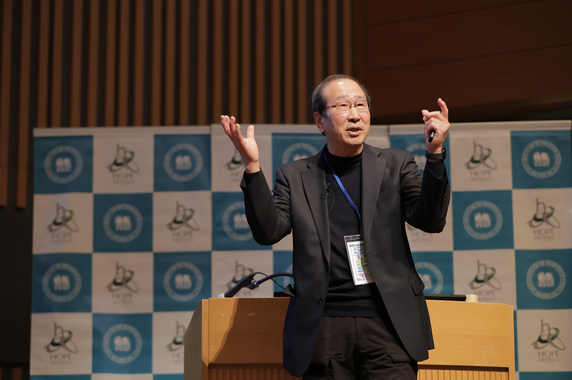
Dr. Kitagawa lecturing
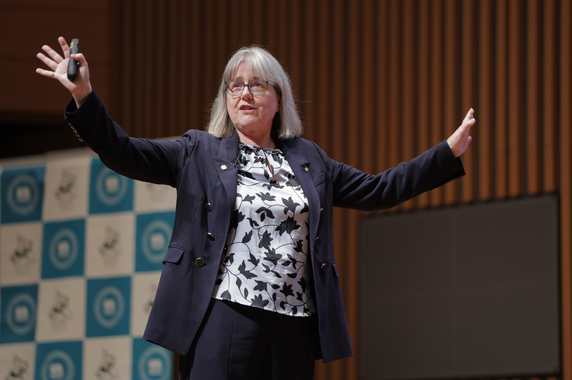
Dr. Strickland lecturing
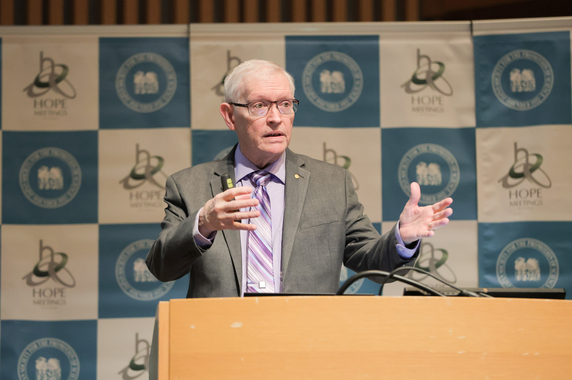
Dr. Moerner lecturing
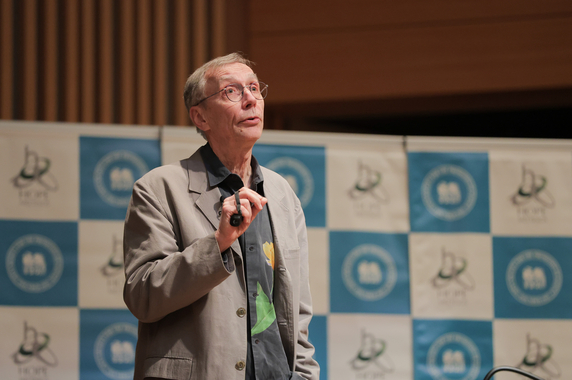
Dr. Pääbo lecturing
Group Discussions with Nobel Laureates
45-minute group discussions were also held with about 20 young researchers surrounding one Nobel Laureate in them. The participants rotated so as to attend group discussions with three Nobel Laureates. Held in a small and friendly atmosphere, the discussions gave the participants an opportunity to deepen their specialized knowledge through talks with the Nobel Laureates about their research and to be inspired by their messages.
During the group discussion session, three pairs of HOPE Meeting alumni (six in total) facilitated the discussion sessions. They exchanged views on the challenges facing young researchers, including career paths and work-life balance.
During the group discussion session, three pairs of HOPE Meeting alumni (six in total) facilitated the discussion sessions. They exchanged views on the challenges facing young researchers, including career paths and work-life balance.
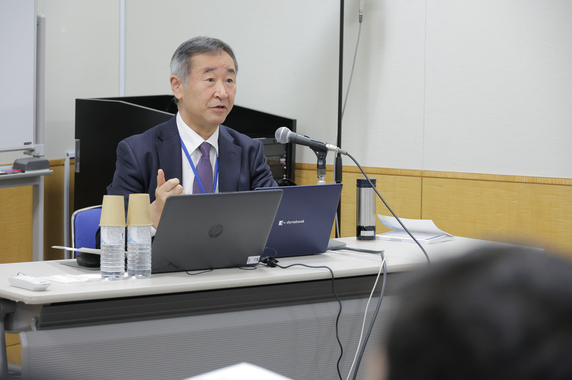
Dr. Kajita in a group discussion
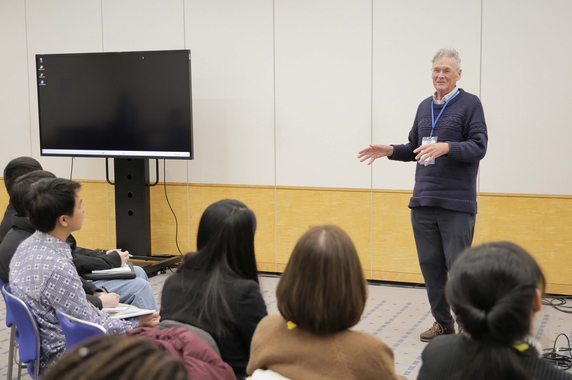
Dr. Hunt in a group discussion
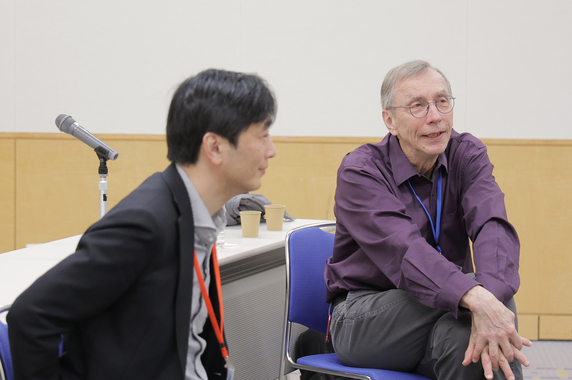
Dr. Pääbo in a group discussion
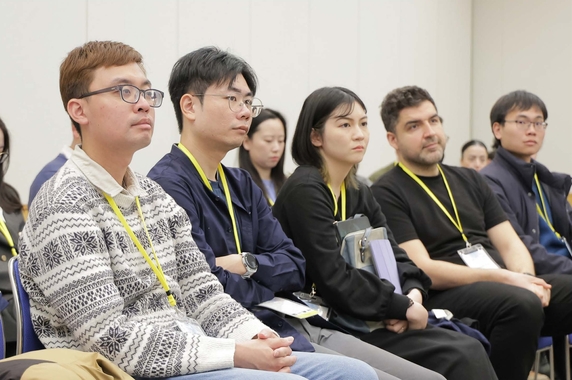
Participants in a group discussion
The participants were assigned roles in two activities: a “poster presentation” in which they presented their research as individual researchers, and “team presentations,” held on the last day, in which they gave presentations crafted in collaboration with multicultural and multidisciplinary teammates.
Presenting participants’ Own Research ―― Flash Talks and Poster Sessions
Posters outlining the participants' research were displayed in the foyer over the course of the HOPE Meeting. On their assigned day, the participants first gave a one-minute “Flash Talk,” summarizing their research, and then described their research standing in front of their posters. Enthusiastically, the young participants explained their research. Their audiences listened intently and asked probing questions.
All attendees, including lecturers, Organizing Committee members, and moderators, cast one vote each day for the poster-award selection. Based on the results of the voting, the Organizing Committee conducted a collegial review and selected the poster award winners. The “Best Poster Presentation Award” was presented to the six best poster presenters, and the “Chairperson's Award (HOPE Award)” was given to one of the Best Poster Award winners.
Chairperson's Award (HOPE Award)
OKITA Hikari (Institute of Science Tokyo)
Best Poster Award
- Yuhang ZHANG (Peking University)
- TAKANO Sanako (University of California)
- OKITA Hikari (Institute of Science Tokyo)
- Jiwon KIM (Chung-Ang University)
- Katrin Gabriela HEWITT (Bioeconomy Science Institute)
- Abdullah Bilal OZTURK (Yildiz Technical University)
All attendees, including lecturers, Organizing Committee members, and moderators, cast one vote each day for the poster-award selection. Based on the results of the voting, the Organizing Committee conducted a collegial review and selected the poster award winners. The “Best Poster Presentation Award” was presented to the six best poster presenters, and the “Chairperson's Award (HOPE Award)” was given to one of the Best Poster Award winners.
Chairperson's Award (HOPE Award)
OKITA Hikari (Institute of Science Tokyo)
Best Poster Award
- Yuhang ZHANG (Peking University)
- TAKANO Sanako (University of California)
- OKITA Hikari (Institute of Science Tokyo)
- Jiwon KIM (Chung-Ang University)
- Katrin Gabriela HEWITT (Bioeconomy Science Institute)
- Abdullah Bilal OZTURK (Yildiz Technical University)
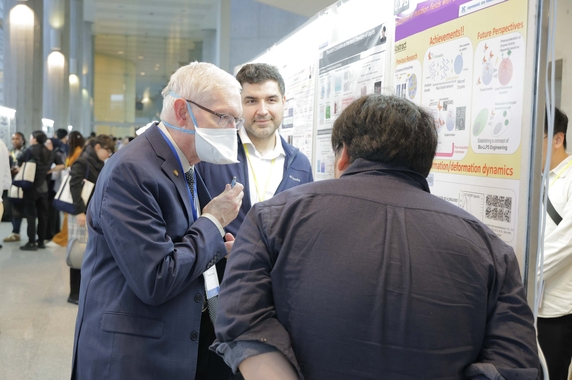
Dr. Moerner at a Poster Session
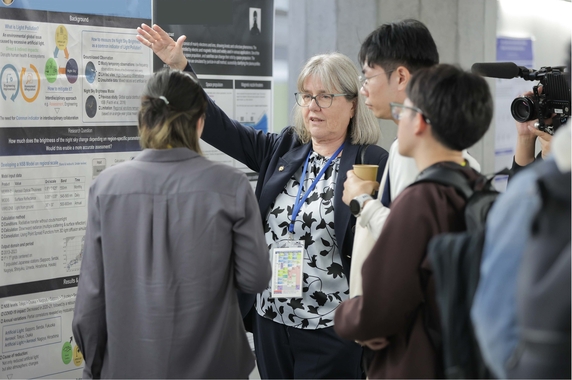
Dr. Strickland at a Poster Session
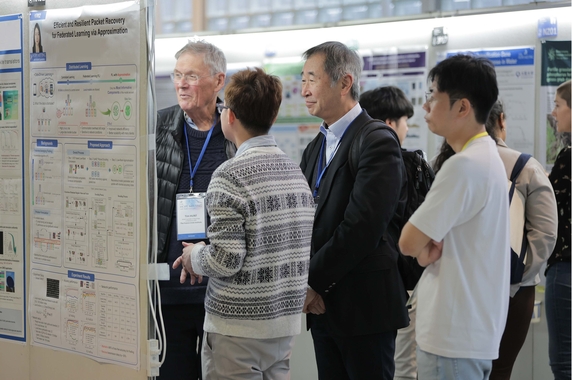
Dr. Hunt and Dr. Kajita at a Poster Session
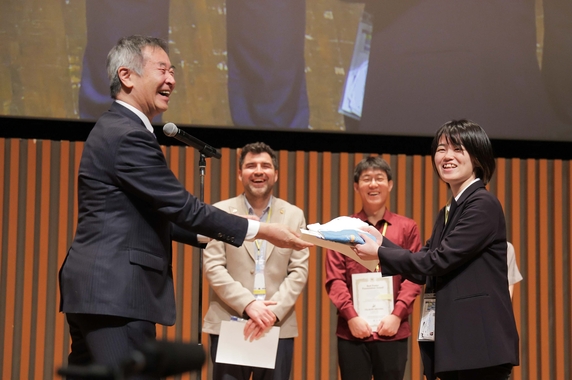
Best Poster Presentation Award
Creating Presentations with Peers ―― Team Presentations
The 100 participants were assigned by the secretariat to 10 teams, titled Team A to Team J. Within a limited timeframe, teammates of different cultural backgrounds and research fields worked together to create presentations on how they, as scientists, could contribute to solving common societal problems, such as achieving SDGs (Sustainable Development Goals). The presentations were delivered on the final day on the meeting.
In the closing ceremony, two types of awards (Unique and Best) were presented to the two winning teams by Dr. KAJITA, chosen based on the results of voting by all the participants.
In the closing ceremony, two types of awards (Unique and Best) were presented to the two winning teams by Dr. KAJITA, chosen based on the results of voting by all the participants.
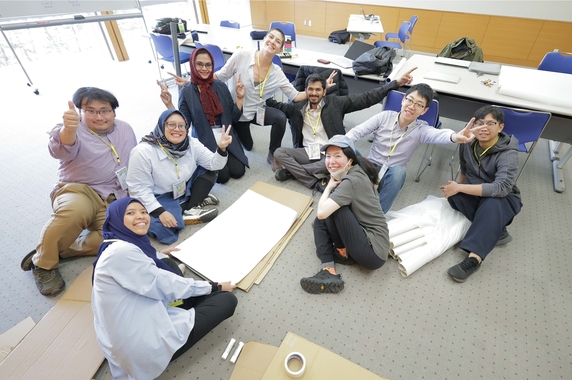
Participants working in teams on assignments
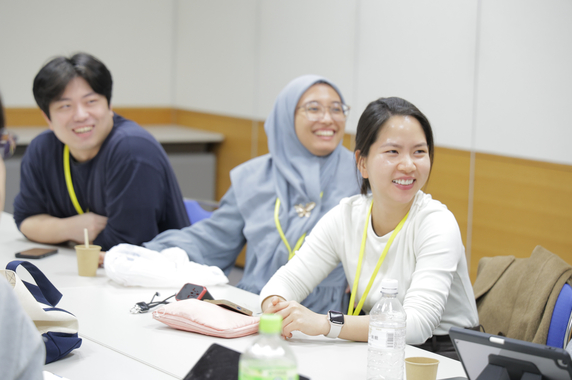
Participants working in teams on assignments
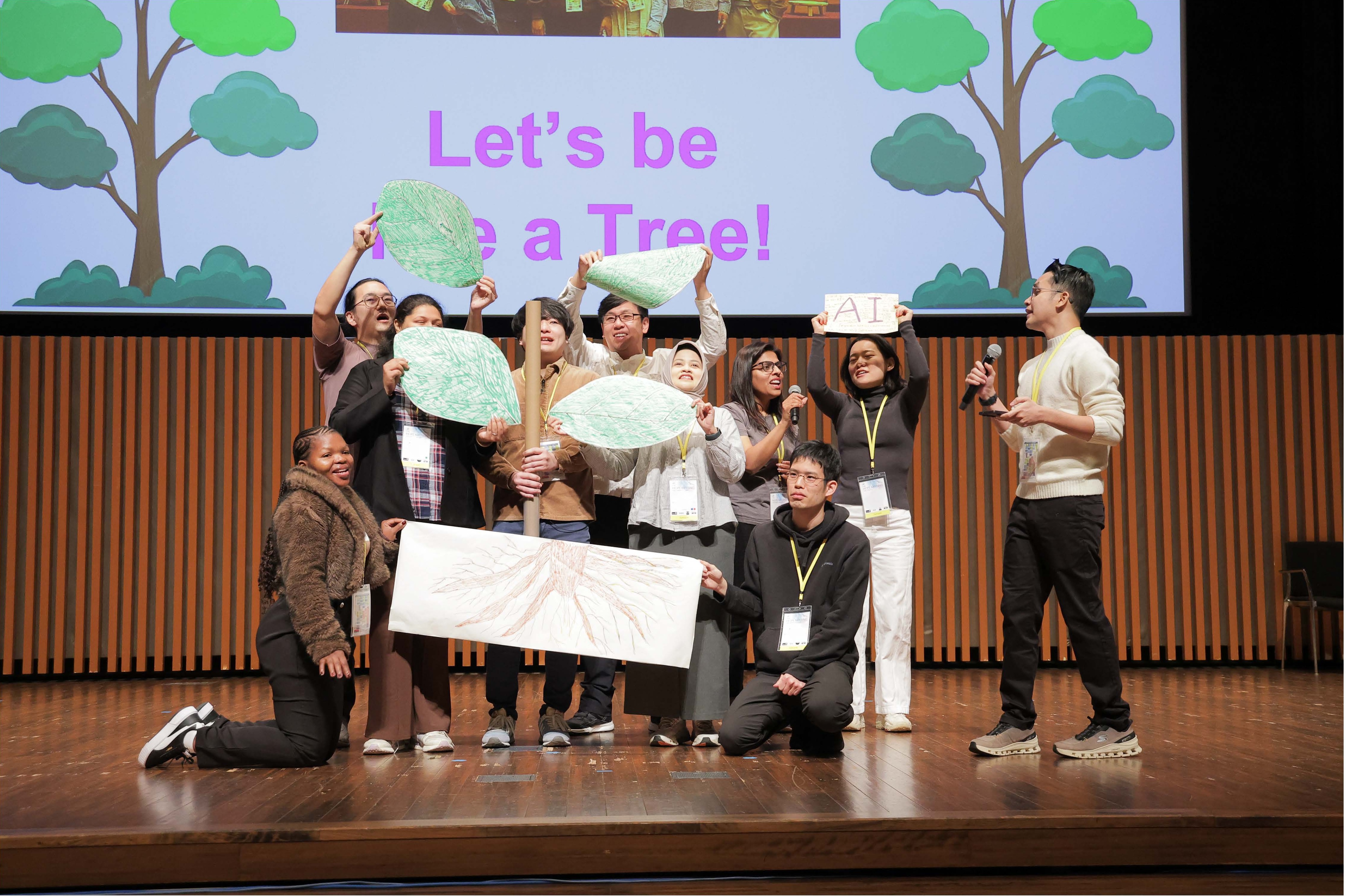
Team Presentation
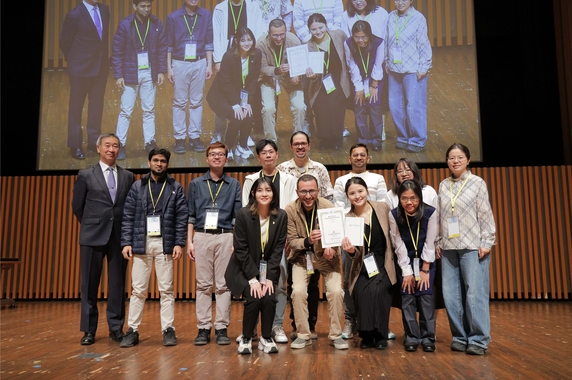
Winner of the "Best Team Presentation Award" (Team A)
So as to incorporate pulsating activities into the HOPE Meeting program in lieu of just passive lecture listening and to raise awareness among the young researchers in the ethical aspects they may face in conducting their research activities, a “Research Ethics Workshop” was held. Professor NAKAMURA Masaki of Osaka University was invited to give the lecture. The workshop was conducted using the Dilemma Game (external site) developed by the Erasmus University Rotterdam in the Netherlands. Divided into small groups, the participants enthusiastically engaged each other in playing their game roles.
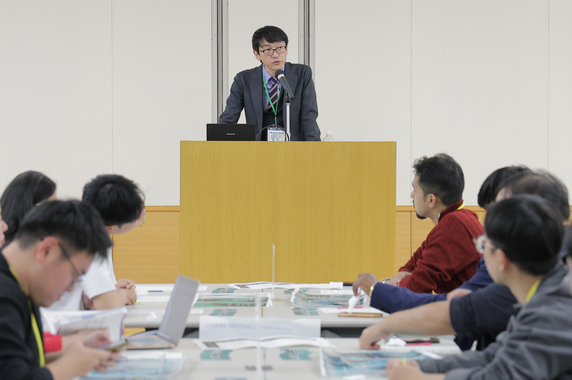
Dr. Nakamura at the Research Ethics Workshop
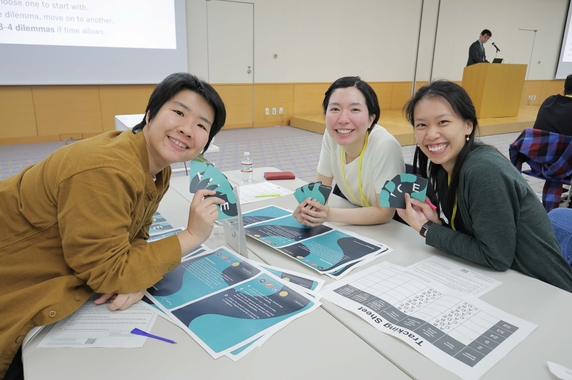
Research Ethics Workshop
Young researchers from the participating countries and regions visited Japanese research institutions.
Divided into three groups, they visited High Energy Accelerator Research Organization (KEK)(external site), National Institute for Materials Science (NIMS)(external site), and International Institute for Integrative Sleep Medicine, University of Tsukuba (IIIS)(external site), where they listened to explanations from researchers and toured research facilities and laboratories.
To introduce research activities and opportunities in Japan, JSPS’s staff described the JSPS Fellowship Program for Overseas Researchers during the group discussion and lunch periods. Pathways for young researchers from other countries to pursue their research as JSPS Fellows in Japan and backup systems for the Fellows were explained. Japan’s flagship World Premier International Research Center Initiative (WPI) program was also introduced during the HOPE Meeting program.
Divided into three groups, they visited High Energy Accelerator Research Organization (KEK)(external site), National Institute for Materials Science (NIMS)(external site), and International Institute for Integrative Sleep Medicine, University of Tsukuba (IIIS)(external site), where they listened to explanations from researchers and toured research facilities and laboratories.
To introduce research activities and opportunities in Japan, JSPS’s staff described the JSPS Fellowship Program for Overseas Researchers during the group discussion and lunch periods. Pathways for young researchers from other countries to pursue their research as JSPS Fellows in Japan and backup systems for the Fellows were explained. Japan’s flagship World Premier International Research Center Initiative (WPI) program was also introduced during the HOPE Meeting program.
Programs to give the participants opportunities to experience Japanese culture were also held during the HOPE Meeting. They watched a Awa Odori performance, after which the participants were divided into three programs based on whether they wished to participate in a tea ceremony, Furoshiki or Nioi Bukuro (Scent Sachet). These activities gave them the chance to actually experienced traditional Japanese culture both with their hands and bodies. During the Awa Odori performance, the participants joined in dancing and had a great time.
On the last day, the participants went on an excursion to Asakusa (浅草), where they enjoyed rich cultural surroundings including the Senso-ji Buddhist Temple and the traditional Nakamise shopping street.
On the last day, the participants went on an excursion to Asakusa (浅草), where they enjoyed rich cultural surroundings including the Senso-ji Buddhist Temple and the traditional Nakamise shopping street.
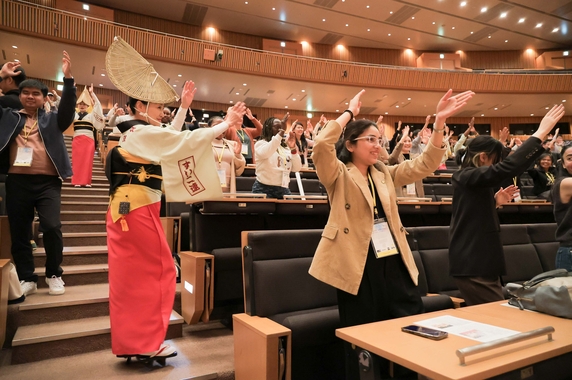
Concert(Awa Odori)
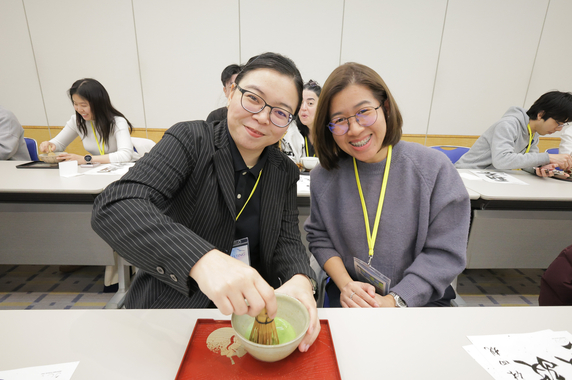
Japanese culture experience(tea ceremony)
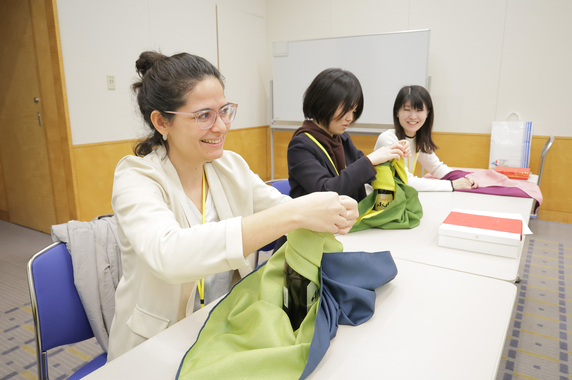
Japanese culture experience(Furoshiki)
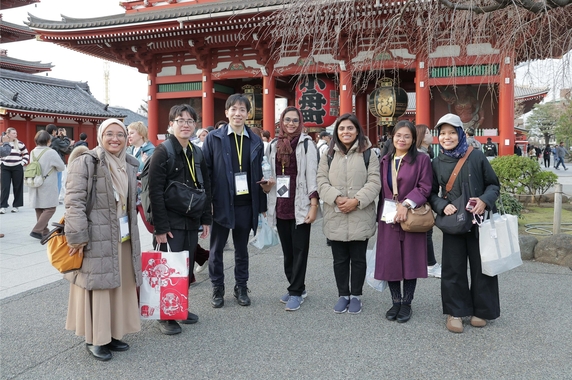
Excursion(Asakusa)